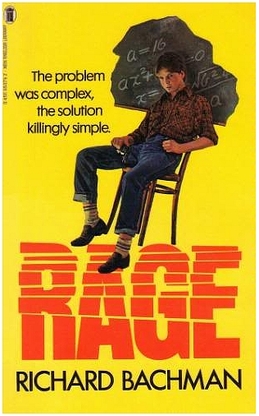
In 1977 Stephen King published a novel entitled Rage under the pen name of Richard Bachman. In this novel a troubled high school student kills two teachers using a gun and then holds his class hostage. The gun-toting teen and his hostages end up bonding and talking about their lives and the secrets they have been hiding. The end result is a twisted version of what happens in a movie that was made 8 years later: the teen classic Breakfast Club. I think Rage is a brilliant work with regards to its social commentary. However, insofar as horror is concerned the novel is really not a big deal in a genre that figures all sorts of monsters, psychos, and grotesque occurrences. The problem with Rage is that it made the leap from the fictional into the real.
Some actual and attempted school shootings during the 80s and 90s were linked back to the novel when it was discovered that the perpetrators had read it and could have been inspired by it. The author was so shocked by this that he asked his publisher to take the novel out of print.
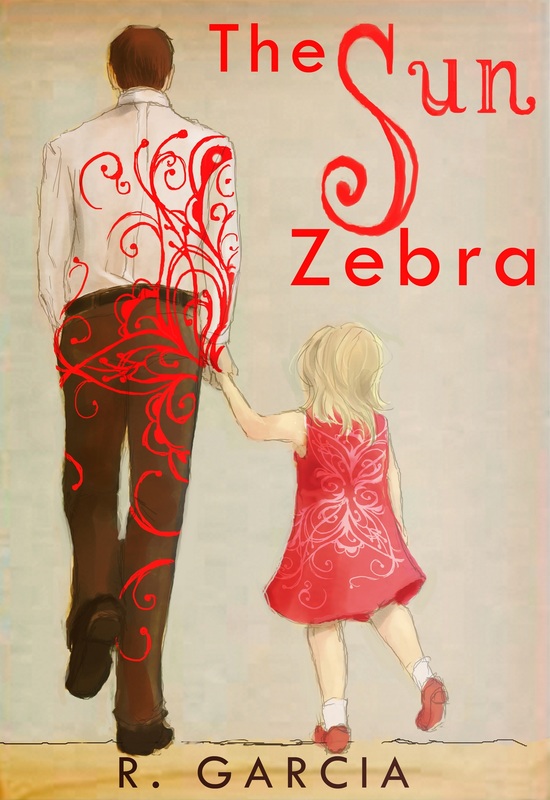
So let me get to the crux of this post. If you found that a book you wrote was inspiring acts of violence, would you remove the book from circulation? We can even take it a step back. Would you write something if you knew that there would be the chance some disturbed person somewhere would use it as an inspiration to harm others? Would you censor yourself? In my next book of short stories, Spirit Women, there are stories where murders are committed. Should I publish it? What if I give ideas to some disturbed person? Would I want that on my conscience? Do I have a social responsibility as a writer? Should I stick to writing the wholesome family stories that are featured in my book The Sun Zebra forever?
One problem is that deranged people will be inspired by the craziest things to carry out or justify their acts. Charles Manson and his clan took inspiration from songs by the Beatles (most notably Helter Skelter) and from the book of Revelations in the Bible when carrying out their brutal murders in 1969. Timothy McVeigh made a reference to the reaction of audiences to the blowing of the Death Star in the movie Star Wars to justify the morality of his bombing of the Murrah Federal building in Oklahoma City in 1995. A sick or troubled mind will twist anything to justify preconceived beliefs.
However, the cases above are “abstract” whereas the specific subject matter of novels like Rage is more explicit and therefore more prone to produce copycat behavior. And I do admit that when it comes to kids and guns the issue is way too emotional for me to deal with, especially after the recent Sandy Hook shooting. To answer the questions I posed above, I think that if I had written Rage I would have done like Mr. King and yanked it from the shelves if I had found it could have inspired acts of violence. But would I have written it at all? The puzzling answer is yes. I would have written it and then hoped for the best. The reason behind my apparent contradiction is that I believe stories like Rage are nothing but mirrors. What they show us may not be pretty, but if these stories are censored we would never see our reflection. In the case of Rage that reflection was a society that was ignoring abuse by teachers, bullying by students, and domestic violence in the community. Challenging the status quo always produces conflict and occasionally has tragic consequences, but is censorship and business as usual the alternative?
What do you think?
***
If you like this blog you can have links to each week's posts delivered to your e-mail address. Please click here.
Some actual and attempted school shootings during the 80s and 90s were linked back to the novel when it was discovered that the perpetrators had read it and could have been inspired by it. The author was so shocked by this that he asked his publisher to take the novel out of print.
So let me get to the crux of this post. If you found that a book you wrote was inspiring acts of violence, would you remove the book from circulation? We can even take it a step back. Would you write something if you knew that there would be the chance some disturbed person somewhere would use it as an inspiration to harm others? Would you censor yourself? In my next book of short stories, Spirit Women, there are stories where murders are committed. Should I publish it? What if I give ideas to some disturbed person? Would I want that on my conscience? Do I have a social responsibility as a writer? Should I stick to writing the wholesome family stories that are featured in my book The Sun Zebra forever?
One problem is that deranged people will be inspired by the craziest things to carry out or justify their acts. Charles Manson and his clan took inspiration from songs by the Beatles (most notably Helter Skelter) and from the book of Revelations in the Bible when carrying out their brutal murders in 1969. Timothy McVeigh made a reference to the reaction of audiences to the blowing of the Death Star in the movie Star Wars to justify the morality of his bombing of the Murrah Federal building in Oklahoma City in 1995. A sick or troubled mind will twist anything to justify preconceived beliefs.
However, the cases above are “abstract” whereas the specific subject matter of novels like Rage is more explicit and therefore more prone to produce copycat behavior. And I do admit that when it comes to kids and guns the issue is way too emotional for me to deal with, especially after the recent Sandy Hook shooting. To answer the questions I posed above, I think that if I had written Rage I would have done like Mr. King and yanked it from the shelves if I had found it could have inspired acts of violence. But would I have written it at all? The puzzling answer is yes. I would have written it and then hoped for the best. The reason behind my apparent contradiction is that I believe stories like Rage are nothing but mirrors. What they show us may not be pretty, but if these stories are censored we would never see our reflection. In the case of Rage that reflection was a society that was ignoring abuse by teachers, bullying by students, and domestic violence in the community. Challenging the status quo always produces conflict and occasionally has tragic consequences, but is censorship and business as usual the alternative?
What do you think?
***
If you like this blog you can have links to each week's posts delivered to your e-mail address. Please click here.

 RSS Feed