Picture
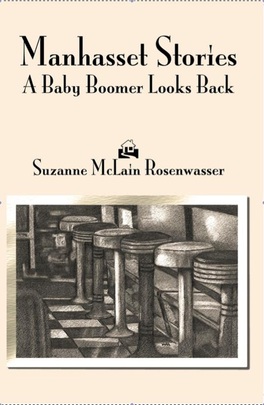
Can you name all the children in your Kindergarten class? Suzanne McLain Rosenwasser can, and the name of the bus driver, and the policeman, and even the garbage man! In this great book the author describes with exquisite detail what it was like to live in Manhasset, Long Island in the three decades following the 1950s. This is not only a memoir but also a portrait of small town, America as it changed along with the world around it.

The book is made up of twelve 2-3 page stories (and one recipe), two of which have been featured in the New York Times, and one of which earned a Long Island Press Association Award. The stories cover everything from vacationing at beach 9 where the hotdogs were so crisp they snapped when bitten, to the author being a "popover girl" at Patricia Murphy's Candlelight Inn Restaurant. There is even a (very) short mention of slumber parties at the convent of Our Lady of Grace where some of the girls went (gasp!) skinny dipping in the pool while the nuns slept.

Alternating between nostalgic and funny, this book is an examination of the glue that holds a community together in the midst of change, and of the values, experiences, and metaphors which over the years turn children into adults who have a clear sense of belonging. The author's writing is so casual and engaging that when you are reading you feel she is talking while seated next to you.

Whether you want to read Manhasset Stories as entertainment, as history, or as a blueprint for jotting down reflections about your own life, you will not be disappointed. Buy Suzanne's book and join her in her quest to seek old Manhasset in the shadows of memory.

 
 
The music from the Nutcracker holds a special place in my heart. The performance of the Sugar Plum Fairy here using the glass harp makes it sound even more magical; enjoy!
 
 
Picture

I wish you the best for these holidays and a wonderful new year 2012!

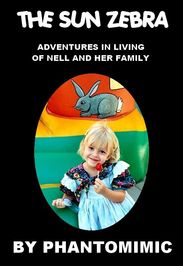
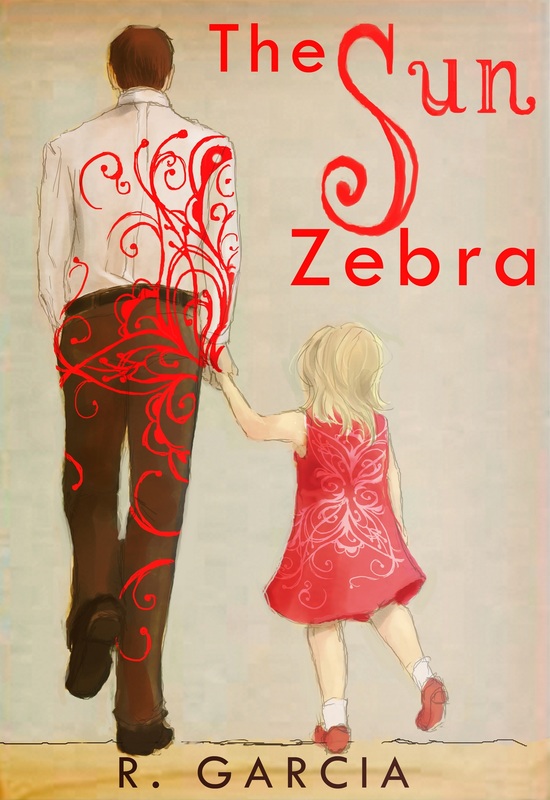
I would be honored if in this season to be jolly you can join Nell and her family as they go looking for the zebra and the meaningful Christmas here!


Michele's post may be restricted to the particular case of an Indie store event coordinator/marketer, but she makes some broad generalizations that I wish to address.

Self-published books are a market. In every market you find good items and bad ones, you just have to sort through them. How do you decide which one is good? In the old days an editor would decide that. This seems to be the frame of mind that Michele has. I think this is why she is so judgmental when she says most self-published books suck. In the new model the editor is no longer the gatekeeper, it is the reader who makes this decision. This leads to the question of how to distinguish between a book that does not sell because it is considered "bad" by readers, and a book that does not sell because it is not visible to enough readers.

I have just self-published a book of short stories, The Sun Zebra, and it is not selling as well as I would like. The writers that I admire and respect who have read the stories tell me they liked them, and they have read the book to other people that don't even know me, and those people like the stories, too. I have made a great effort to correct aspects of the plot and grammar in the stories. Like many other writers, I know my book may not be perfect, but it doesn't "suck". The problem I (and many other writers) have is marketing. If only we could make our books more visible, I am willing to bet that more people would be willing to buy and read them. And if they do, they would find they like them.

I am sorry that Michelle had such a bad experience but she can hardly fault self-published writers from trying their best to promote their books. After all, it's a jungle out there. Pushy? Rude? Self-absorbed? Maybe, but don't we have a saying that "The squeaky wheel gets the grease?" If you don't love your book, if you are not willing to push it and cross all those hurdles, who will? I believe in good manners, and respect towards others, but sometimes "nice" becomes synonymous with "ignorable", and that is bad for marketing.

To Michelle and her bookstore I have two pieces of advice.

The first advice is: Set filters. State, for example, that you will not even consider taking a look at a book unless it has gathered so many 5 star reviews from other authors, or sold so many copies, or unless the author has a mailing list of so many people, or a blog with so many hits, or a presence in social media with so many followers, etc. This will reduce the flood of self-published authors knocking at your doors and will only let through those willing to work hard to market their books and find an audience.

The second advice: Stop thinking in terms of whether the story is good enough for editors to read and start thinking in terms of whether it will be the sort of story that normal people would like to read. Normal people don't have a tenth of the grammar and writing skills of editors. What is important for an editor may not be important for a normal person. The grammar, the formatting, the cover, and even the plotline and characters can be changed to make them better, but what is paramount is the story itself and how it speaks to readers. That is the soul of the book, without it the book is nothing and no editor can improve upon it regardless of whether the book is self-published or not.

I want to thank everyone who left a comment on this controversial thread.

Phanto


I recently read this on the comment thread of an article about reasons not to self-publish and I thought I would share it with you here. It was by a person called "Michelle".

                                                                            ***
I work as an event coordinator/marketer for an independent bookstore that has been inundated in recent years with self-published authors looking for shelf space and store events for their books. We get – and I am not exaggerating – between 400 and 500 requests a year from self-published authors asking us to stock and promote their book. On a slow week, we get 5-10 requests; on a busy week we’ll get 20.

If you ask most indie bookstore event coordinators about self-published authors, you will probably see some combination of eye-rolling, teeth grinding, or derisive laughter. Self-published authors are the bane of our existence. There are so, SO many would-be self-published authors that would do well to read this piece, and read it thoroughly. And then second-guess their decision to self-publish. But I know they won’t.

Why do I loathe (most) self-published authors? Here’s why. And I’m saying all this so maybe – MAYBE – there’s a self-published author out there who will read this and then understand what they are up against when it comes to marketing their self-published book through their friendly neighborhood indie bookstore.

1. Their books suck. There is no other way to say this. Bad writing, bad grammar, bad spelling, bad plot/character development, bad subject matter, etc. Don’t even get me started on do-it-yourself cover art. The book is bad. It’s bad. That’s why it couldn’t get published by a traditional publisher. But you can’t tell the self-published author of this monstrosity that their book is substandard and unsellable. Because they would act like you’ve just told them their brand-new firstborn child is ugly. Hey, I get it. You put a lot of work into this thing, and you ended up with an ugly baby. But that doesn’t change the baby’s looks, or the book’s ability to sell.

2. 90% of self-published authors are rude, pushy, completely self-absorbed, and relentless. This is my BOOK! It’s my MASTERPIECE. How dare you say it is not worthy of being stocked in your store, unless I pay for consignment?? How dare you, to not jump up and down and beg me to do an event for this book – even though I am not really from around here, I have no friends, and the book has only a very narrow niche appeal since it’s about my past life experience as a 16th century vampire with a skin condition?? Some of them don’t even bother to pitch the book themselves, but hire some poor hapless “freelance literary agent” to do it for them. Then relentlessly prod the “agent” to get them an event. THE BOOK SUCKS. IT’S NOT HAPPENING.

3. Self-published authors show a really appalling level of self-non-awareness. EVERY self-published author thinks they are the next Stephenie Meyer/James Patterson/That Guy on Amazon Who Sold a Million E-Books. EVERY self-published author thinks their memoir about going on a hiking trip to Alaska where nothing particularly dramatic happened is “special” and that “people will love it!” EVERY self-published author thinks they have written the new breakout bestseller, YA sensation, Great American Novel. I hear the same words from the same types of people over and over and over, about how their books are “different.” The books are never different. 50% of them have badly Photoshopped covers and are printed in Comic Sans.

You wrote a book. Congratulations. Let me make this clear. WRITING THE BOOK AND PAYING SOMEONE TO PRINT IT FOR YOU DOES NOT MAKE YOU SPECIAL. If the book is actually good – and in the several thousand requests I’ve processed, I’ve seen three or four that actually were – THAT makes you special. But please, PLEASE stop acting like paying AuthorHouse or Smashwords or any other vanity publisher a few thousand dollars entitles you to anything. It doesn’t. Not the adoration of untold legions of fans. Not the respect and admiration of your local indie bookseller. Not sales from your friends (who 80% of the time, from what I can see, end up with free copies rather than purchased ones). Not attention from local or national media. Self-publishing means that instead of the book manuscript being stuck in a drawer, there’s a 99% chance you’ll end up with boxes of unsold books in your garage. Fewer than 1% of self-published authors sell more than 150 copies of their book.

Please think about all this, self-publishing authors, before you give your credit card number to Smashwords.

                                                                         ***
What do you think?                            Read my reply to this here.


And yet many claim that the fine labor of these two mothers should not have been dignified by allowing them to be married. This young man is the product of love, caring and rock-solid values. What is there to abhor in love, caring and values? Why do these things cease to matter and become objectionable when the sex of the parents is the same?
 
 
I came upon this document recently, although it was published back in 2008. It is about a computer that wrote a novel! The program was put together by a group of IT professionals and language experts in Russia. They uploaded several literary works into the computer and 72 hours later the gizmo brought forth the novel entitled "True Love". According to the article it is a variation of Leo Tolstoy's Anna Kareina written in the style of the Japanese author Haruki Marakami.

This type of news gives rise to the question of whether computers will replace writers. Towards the end of the article several people claim this will never take place. One draws a parallel to how computers composing music have not replaced musicians. I believe this is the case. Writing is such a complex and multifaceted activity that it seems to me no computer would be able to reproduce it successfully.

However, I lived through the times when chess playing computers were on the rise. In those days I read many an article claiming that computers would never be able to beat the strongest chess players. Nowadays those pundits have long been proven wrong. Computers have been able to defeat even world chess champions.

You can argue that playing chess is nothing compared to writing. I would agree with you but I can't help but shudder at the thought that one day computers will be able to replace us writers. Such a writing machine would have several advantages over us. It would not despair over receiving negative reviews, or worry about whether its work is not selling well, or ask itself whether it would be ever able to quit its day job. But to quote former world chess champion Garry Kasparov after he was defeated in 1997 by a computer: "At least it did not enjoy it!"

That may be the key difference. Even if a machine can write as well as we do, it will not enjoy it, and that is not writing.

What do you think?


Here is another one for all you cat lovers, including writers!

                                   ***
If you like this blog you can have links to each week's posts delivered to your e-mail address. Please click here.