If you are considering publishing your book on the Amazon Kindle you may want to be aware of the 9.99 Boycott. This is a movement within the community of Kindle readers that, not only refuses to buy e-books priced above $9.99, but also will assign negative tags to your books with titles such as "outrageous Kindle price", "too expensive for Kindle", "greedy publisher", or "9.99 boycott". And the more your book sells the more these tags are voted on. Some of the boycotters will go as far as leaving one star reviews on your books based solely on the price.

What is the point of this? Many people find it insane (some even find it offensive) to have e-books priced the same as regular print books. E-books are much cheaper to produce than print books and, therefore, should be priced lower. Authors like Joe Konrath have argued that the sweet spot for book pricing is around $2.99. Other authors like Amanda Hocking (before she signed her deal with St Martin's Press) have gotten away with books priced higher than that, but still below that magic 9.99 number.

Where did this number come from? Apparently when Amazon got started with a Kindle device that cost $400 their sales pitch was that readers could save $20 per book by buying e-books at $10 ($9.99) instead of the hard cover for $30.

At first when the print publishers saw the e-book market as a source of additional revenue there was no problem. However, when it became obvious that the e-book market was growing at the expense of the print market, the $9.99 price became a point of contention with the print publishers trying to protect their paper sales. This is a fight that still goes on nowadays. But that magic "9.99" number got fixed in the psyche of Kindle readers spawning such things as the 9.99 movement.

I personally think authors can charge as much as they want for an e-book. However, I will seldom buy e-books priced above $5.99 (it goes without saying that I think that even $9.99 is too much to charge for an e-book). I will not vote for boycott tags or write a review solely based on price (although it is a factor). But I think pricing is a very important thing to consider when publishing your e-book, lest you want to incur in the wrath of the 9.99 Boycott crowd!

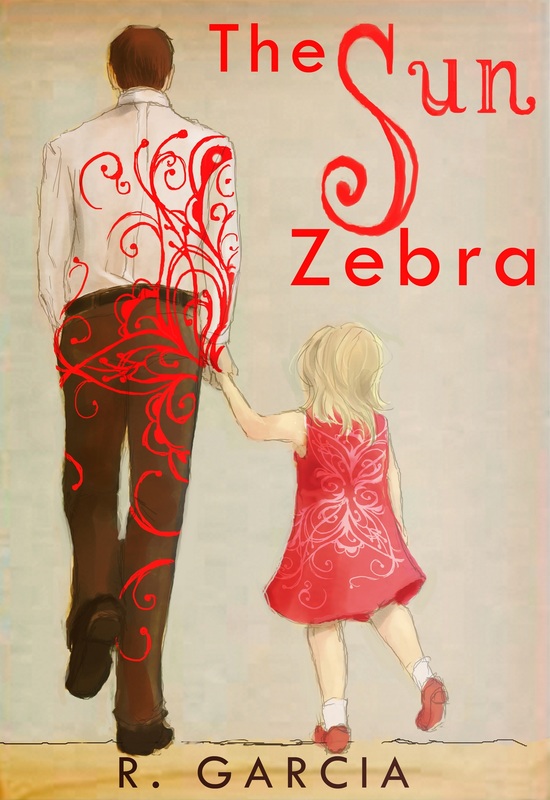
Please check out my first collection of short stories, The Sun Zebra


It has been more than 7 months since author Barry Eisler fired the "shot heard around the world". This was when he walked away from a half a million dollar advance deal (for two books) from St. Martins Press because he figured out he could do better by self-publishing his books.
Now that he has published his next thriller "Detachment" it is time to check out how he is doing.

First of all there is one issue. Eisler did not publish his novel. He signed a deal with Amazon which published it for him throwing its marketing muscle behind it. Because of this some people are claiming that the results are not relevant to address the question of whether he is doing better by self-publishing. But the author is not bothered by this. He has made it clear that he is not an ideologue. He is interested in the best deal he can get. With a publisher like St Martins, Eisler would have ended up receiving a royalty of 17.5% whereas Amazon offers him 70%. In addition he retains control of several aspects of the process of publication of this book that are important to him. Eisler expects this difference (17.5% vs 70%), and the fact that virtual books will be on the shelf forever, to be able to make up for the half million upfront payment that was offered to him.

But how is he doing so far? At Joe Konrath's blog Eisler mentioned that "Detachment" went onto the bestseller list, and in just two weeks earned him more than he has earned from some of his previously published print books. In fact when the book was in the preorder stage, he earned more from it than from his previous digital book, "Inside Out", that was published by Ballantine. Finally, it must be pointed out that if he had signed the print deal "Detachment" would not have been published until the spring of 2012.

So, will "Detachment" and his next book eventually make up for that half million upfront payment he walked away from? We don't know yet but I suspect that Mr. Eisler is having too much fun to care!

Please check out my first collection of short stories, The Sun Zebra


The author Kiana Davenport signed a deal with a division of Penguin Books to publish one of her novels and received an advance. Then the publisher discovered that Davenport had self-published some of her older stories on Amazon. These stories had been published before in several magazines and had even been submitted to Penguin Books which rejected them! However, in Davenport's words, they went ballistic, accusing her of betraying them with a competitor and now they are refusing to publish her novel and demanding that she return the advance. You can read her story on her blog or as part of a New York Times article.

This is the sad state of mind of dinosaurs like Penguin Books. By publishing her stories Davenport, if anything, has increased interest in her publications including the projected publication of her novel. Now she has become a victim of the archaic mentality that still has a stranglehold on a substantial portion of the traditional-publishing world.

This should be a cautionary tale for authors who want to self-publish but are also considering print deals.


Please check out my first collection of short stories, The Sun Zebra


I sat beside a man from Hollywood, California on a plane. He said he had rich and famous friends, he liked droppin’ names. I said ‘Howdy do, that’s good for you, I dig a lot of those actors, but son you ain’t got a thing on me, see I got friends with tractors.

(CHORUS) They’ll grow your groceries, haul a load, pull you out then fix the road, they’re good at slowin’ speeders down when they pass through from out of town. I live out in the country happily ever after, I got everything I need ‘cause I got friends with tractors.


Come Friday night we hit the woods go boggin’ in our trucks. It’s just about a guarantee some good ol’ boy gets stuck. Where I come from you can bet your buck a mud hole ain’t a factor, I’ll sink mine to the floorboards ‘cause I got friends with tractors.


(CHORUS) Yee haw!


I been to fancy five star restaurants and I left there barely fed. They charged me for the water, the butter and the bread.
 That gourmet meal looked more to me like fish bait on a cracker. But I’ll stay fat and happy ‘cause I got friends with tractors.

(CHORUS) Yee haw!

Yeah, man, talkin’ ‘bout internationals, and John Deeres, Massey-Fergusons, whatever you got. We don’t discriminate. Front end loaders, bushalls, post hole diggers. Need ‘em, gotta have ‘em. I believe I do know one actor. Is Larry The Cable Guy an actor? Oh well, he’s got a tractor…


Picture
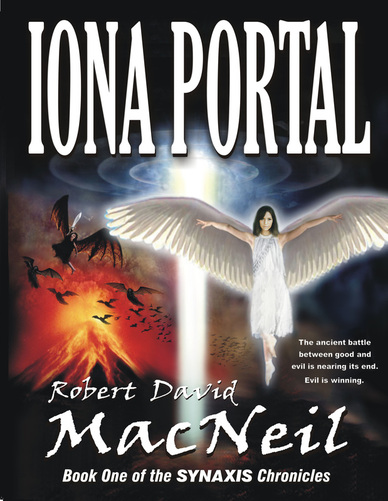
The French surrealist poet Paul Éluard once remarked, perhaps figuratively, "There is another world, but it is in this one." Robert David McNeil would agree, literally. In his thriller "Iona Portal" he has conjured up worlds within worlds whose fates are intimately linked with that of our own, and he uses science, history and psychology effectively to argue for his vision.

Iona Portal is a science fiction page turner in which the author mixes fantasy and reality in just the right amounts. He includes maps of the locations where the story takes place as well as handsome illustrations of some of the events, which makes the narrative much more engaging and believable.

Robert centers his epic on a real place, the mysterious island of Iona, which for centuries has been a destination for pilgrims who are willing to traverse the Scottish lochs, glens, and bogs in order to gain enlightenment and perhaps witness some of the enigmatic things that allegedly happen there. Iona Portal is the story of one such pilgrimage, but with the fate of humanity at stake.

In many ways this is a classic tale. However, the author gives the story the necessary twist that makes it original, while at the same time linking it to rich historical traditions. The pilgrims are stalked by the evil Archons, who due to their large numbers are winning the war. But the Archons are hypersadistic, disorganized, and invariably overplay their hand. The pilgrims are protected by the Irin, who are benevolent and brave, but due to their few numbers, are losing the war. The pilgrims must reach their destination and learn to use their gifts to tilt the balance of the conflict towards the forces of good. 

The book is well written and has an interactive table of contents, which is important due to its size. I found a formatting error in one page, but that did not detract from the reading experience. I recommend reading Iona Portal. It is science fiction, but next time you have a string of bad luck or watch the nightly news, it will make you wonder.