Several years ago I told a friend that the internet would grow to such an extent that all combinations of the letters in the alphabet to form words would be covered. At the time I looked up some nonsense words and I remember one that did not appear in the net, it was "balumba". Recently I looked up balumba again and I got 356,000 hits. These included the name of a car insurance company, a nickname, and a Facebook game called "Balumba Jump". I began to wonder if there are any nonsense words that still could not be found on the web. Of course I don't mean chaotic strings of words like "lsifvfrgukxtutvvgiuyugewhrh". I mean reasonable words say of 3 or 4 syllables long. I decided to try a few. To do this I performed an advanced search on Google entering the word in the "this exact wording or phrase" box. Just out of curiosity I tried "phantomimic". LOL, 103,000 results, my name is sooo common. I then typed in "weringa" and got 29,000 results, among them a group of "experienced Australian business executives who help foreign and domestic companies successfully establish and grow their business across Australia and the Asia-Pacific region". Whatever. I went on to type "sabumafoo", what could possibly be a "sabumafoo"? Nope, 2,710 results, including a cat that chases its tail. But what about "dertrino"? No way anything could be a "dertrino". Well, yes and no, 139 results from a place where they raise German shepherds in Mexico called "Von Der Trino". I guess search engines are allowed these liberties. Anyway, with "gunkine" I got 120 results. Apparently someone uses it as an alias. I thought I had a winner with "hutydo" but I got 39 hits. Although most of the links were in foreign languages there was a reference in a public document to the Hutydo County in California, but no such county exists; weird. With "fribelius" I was getting there, only 19 results. It seems to be a last name in Sweden Then I tried "wurtipio". Darn, almost! Only one result from, of all places, the Istanbul University website. And finally I tried "yorkodel" and yes! No results...for now. What are your favorite nonsense words that are still not on the net?
For the majority of authors, selling their books will be a slow uphill climb that will take many years and regardless of all this effort many authors will not sell well at all. There are no magic formulas or shortcuts. There are things you can do to increase your sales, but most of the time their effect will be incremental; don't expect anything dramatic to happen overnight. I have read advice that we should face this process like we would run a marathon; the trick is not speed but rather consistency, perseverance, and dedication. However, every now and then an unexpected break will come to some writers.
Some authors have had their sales boosted by a comment made by a celebrity. For example back in 1984 novelist Tom Clancy had published his classic "The Hunt for Red October" and president Ronal Reagan casually mentioned at a press conference that he liked the book. This guaranteed the book's success and helped launch Clancy's career. But this was way before the modern internet culture took off. Today, the interconnectness of people instantly communicating over the World Wide Web creates the potential for a given, story, book, or video to go "viral".
A recent example is the children's book for adults "Go the F*** to Sleep" by author Adam Mansbach. The author sent a PDF to several booksellers before the publication of the book on Amazon. Somebody forwarded the PDF out into the world and it went viral. Initially the author and his publisher, not yet savvy in the ways of the web, tried to contain the beast but then it dawned on them that this illegal spread of the book was helping their sales. "Go the F*** to Sleep" became an overnight success and went straight to the number one position.
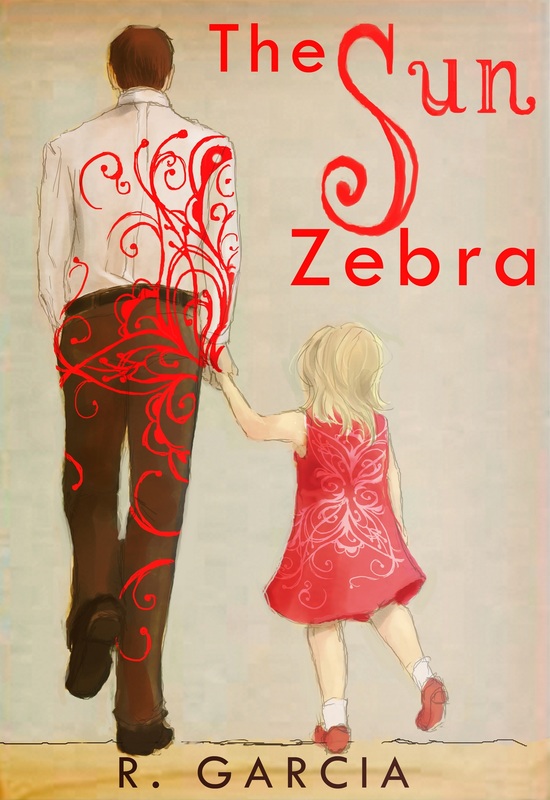
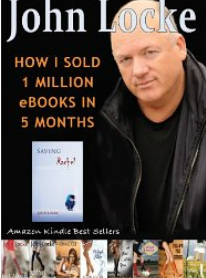
Mansbach's case was more of an accident but there is the author John Locke who wrote a very particular piece in his blog and promoted it to a well-defined audience, which made it go viral. He describes what he did in his book "How I sold 1 Million e-Books in 5 Months", that I have reviewed here in my blog. However, although I agree with the merits of following this approach, and I believe it can help book sales, I don't think the viral power of the internet can be harnessed so easily.
It is extremely difficult to predict what will capture the attention of people in social media so that they share a given content or link with thousands of others. Of course, it doesn't hurt to try, and some people will be successful, but I think most of us will get stuck running the marathon rather than catching the virus.
What do you think? Do you have any tips for going viral you would like to share here?
This is an amazing application of the laws of physics regarding the center of mass. Notice that each new piece is longer and heavier. The man has a superb skill not only in achieving the balancing but in having chosen/made the pieces to balance just right.
As many of you know, the Borders bookstore chain is closing for the simple reason that it failed to adapt to the digital age. It's competitor, Barnes & Noble, developed its own digital book business and put out an e-reader (the Nook), but now is losing money and was reported last year to be holding discussions about a possible sale. The problem is that hardcover books are the most lucrative business for these stores and their sales have taken a hit from readers who are increasingly unwilling to buy these books. Will the remaining brick and mortar stores like Barnes and Noble disappear or will they streamline and transition into the 21st century? At the moment no one knows for sure but there are many enthusiastic voices out there calling for their demise and that of print books. However, I am not one of those voices.
Don't get me wrong, I think we are gaining a great deal with the advent of e-books and online publishing. But there are things about the experience of a printed book that we cannot reproduce digitally. For example the feeling of the texture of the paper in your fingertips, the sound it makes when you turn the pages, and that smell that emanates from very old books. It is also said that e-books are forever. I am not sure this is true, but even if it is, I think there is something unique about the ephemeral. The fact that print books are fragile and "mortal" makes us have a certain disposition towards them that we will never have for e-books if they indeed last forever. After all, doesn't our respect for life come from the fact that we can die?
Another thing about print books is that they can record history. These books can be thrown and dropped, they can get damaged by moisture and mold growing on them, they can get stained, and they can be marked. Many people have old books with certain marks or damage in them which they treasure because of the significance of those marks or damage. It is sometimes observed that "a face without wrinkles is like a book in which nothing has been written". Well, e-books are just such a face. If e-books can last forever, then they will look the same 100 years from now. Can you imagine a father pointing at the screen of a futuristic version of an e-reader and telling his son, "This file here was downloaded by your great-grandfather one hundred years ago." Where is the wear and tear? Where is the proof that you have traversed the ocean of time? Where are the wrinkles?
But then again, I am someone who enjoyed the vinyl smell that records released when they were opened for the first time, and also liked the fact that by looking at the grooves of the record I could tell whether the song was a ballad or not. These and other sensory experiences were lost when CD's came along. Of course, this is just me having nostalgia for some things we lost and for others we will maybe lose with ongoing modernization. In any case, the odds are that the new generations will never miss them. So go ahead and look to the future, I am doing that too, but I can't help keeping an eye on the past.
This is not a book about writing. Mr. Locke admits that he is not a great writer, but he also states he doesn't "suck". And this is fine because, as he also points out, he writes to entertain, not to impress. So this book will not improve your writing. This is a book about how to sell what you write. Between being the best novelist and the best selling novelist, the author states he'd rather be the latter, and many would say he has succeeded.
Mr. Locke begins the book by telling us about all the mistakes he made spending thousands of dollars to market his books while his sales languished. Then he tells us about how he developed and applied his system, which caused his sales to take off. The interesting thing is that his system involves things many writers already do like writing a blog and using twitter, but he uses these tools in his own particular way which often runs against conventional wisdom.
For example, haven't we all been told that we need to constantly tend our blogs, posting daily if necessary? Well Mr. Locke posts only 12-15 times a year in his blog! And Twitter, I have used Twitter for one year. Well, after the author revealed how HE uses Twitter I had one of those "duh" moments. I can't believe I didn't figure that out by myself!
While many writers may find it difficult (I would even say "unnatural") to follow Locke's central directive on how to go about writing, I still think the book has a lot of great ideas to improve your sales strategy. At $4.99 this e-book is towards the high end of what e-books should cost. However, as the author states (and he sounds very sincere), he would have paid $10,000 for these ideas when he was in low-sales limbo. If you are also in this sales netherworld or want to avoid ending up there, this book may give you the framework that you need.
Just thought I would share with you this tip that I read in cyberland.
Many Kindle authors want to give away some of their material for free on Amazon as a promotional strategy. The problem is that Amazon does not allow books to be given away for free. Digital books between 3 and 10 megabytes must be priced at a minimum of $0.99. And in case you are wondering, yes, selling your book at $0.99 is vastly different from giving it away for free. But there is a trick you can use.
Amazon also has the policy of price matching. That is, if a competitor like Barnes and Noble offers your book for a lower price then Amazon will match that price, at least for a while. So what many authors do when they want to give away their Kindle books is that they publish them for free on sites like Smashwords. Smashwords then distributes to Barnes and Noble and other book outlets. Amazon notices that their competitors have listed your book for free and lowers the price to zero for about a week or so at a time.
This has dramatic effects. Some authors report that their free books were downloaded at a rate of hundreds of downloads per hour with some reaching into the tens of thousands during the "free" period. Of course, these authors were not making money, but this is a very effective way to advertise yourself drawing attention to your other books and to your website.
It is only fitting that this racist lunatic and his followers that brought so much misery upon this world end up lampooned in this way. "Moving on Up" was the theme song of The Jeffersons, which was the longest running sitcom in the US (1975-1985) with a predominantly African-American cast.
In an earlier post I quoted the Codex study that indicated that the majority of people who purchase books, and even those who purchase books online, do not learn about the existence of these books through social media sites like Youtube, Twitter, or Facebook. In that post I listed, based on the study, some more effective things writers can do to generate sales. But what is the most effective thing a writer can do?
Another study that I mentioned before from PubTrack documented the book-buying behavior of 40,000 people from 2010 to 2011. According to this study, about 22% of book buyers said they bought a book because they liked the author, 11% bought a book because it was part of a series, and 8% bought a book because a friend or relative recommended it. Thus, these three categories that involve a direct or indirect familiarity with the author, accounted for 41% of book sales.
So what is a no-name author to do to generate sales of his/her book? The obvious answer is to build a platform and make yourself known. However, people have to not only know you but also be able to read your work. If they like you and your work, the sales will come when you sell your books. And the best way to do this is to give out free samples of what you write.
On sites like Scribd and Goodreads, writers can post samples of their work and share it online. You can gain a group of followers, and you can make friends, and contact friends of friends. Then use Youtube, Twitter, and Facebook to give out free samples of your work and direct people to your website. It is a process that for most writers will not happen overnight so if you have not done it yet, it is time to get started!
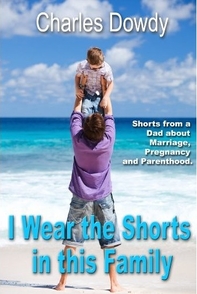
The Lighter Side of Marriage, Pregnancy, and ParenthoodIt was difficult to read Charles Dowdy's "I Wear the Shorts in This Family", not because it was actually difficult to read, but because I kept doubling over laughing. In this book the author takes us on a tour of his experiences in courtship, marriage, pregnancy, and parenthood, but he does it with a keen eye for finding the humorous amidst the mundane. Charles has a knack for making the circus of bringing four kids (two of them twins) into this world, and parenting them, come to life in all its glorious lunacy.Among the topics that are touched in this book are: thank you note writing for wedding presents, maternity clothing, visits to the doctor, the kids destroying the house, in-laws, family functions and vacations, puppies, oversized lawnmowers, letters to Santa, an attempt to change the neighborhood constitution, and even that close call with the pickle jar that all men dread and have nightmares about. But not everything is fun and games. Towards the end of the book in the chapters "Beaks and Freaks" and "Crawfish in the Family" Charles presents deep and true reflections on the ways in which having children changes parents.The book is very well laid out with a working table of contents that links to the 24 individual stories, and it is very well written. There is a typo or two but this does not detract from the enjoyment of the stories. Now the pressure is on the author, as he acknowledges in the preface, to deliver a second book that is just as good. But the teenage years should provide him with enough material for that! This is your new blog post. Click here and start typing, or drag in elements from the top bar.
The writer Herman Melville of Moby Dick fame is one the most famous cases of writer's block that is often mentioned. Melville wrote a series of books in the late 1840s and early 1950s that made him famous but then was unable to write anything that could reproduce this literary success. However, it has been suggested that what happened to Melville is not that he developed writer's block, but rather that he exhausted his artistic capital.
At the time Melville wrote, many thought that he was making up his stories. As it turn out this was not entirely the case. Melville based his most successful books like Typpe, Omoo, and Moby Dick on his real-life seafaring adventures, and this is what his readers liked to read. What seems to have happened to Melville was that he ran out of experiences. These experiences were his artistic capital, and once he converted this capital into books he went broke.
Some writers do not seem to have this problem and are capable of creating stories in a manner that is by and large independent of their real-life experiences. These writers have an unlimited artistic capital. Other writers, however, base their stories at least partly on their real-life experiences, which are finite. These writers have a limited artistic capital. Once they exhaust these experiences writing on a particular topic they are unable to write anything else that is similar. If their readers then clamor for more, the writer will be unable to deliver.
One obvious way to deal with a dwindling artistic capital is to accumulate more of the type of experiences that you are writing about. But very often this is not feasible or desirable. Another option is to get in touch with or research the experiences of others and base your writing on theirs.
As a writer, especially if you have become successful writing about a particular topic, you should examine the nature of your artistic capital and become aware of its limitations and potential.
|